
How AI Is Shaping Patrol Routing and Incident Response
By Kenji Tanaka
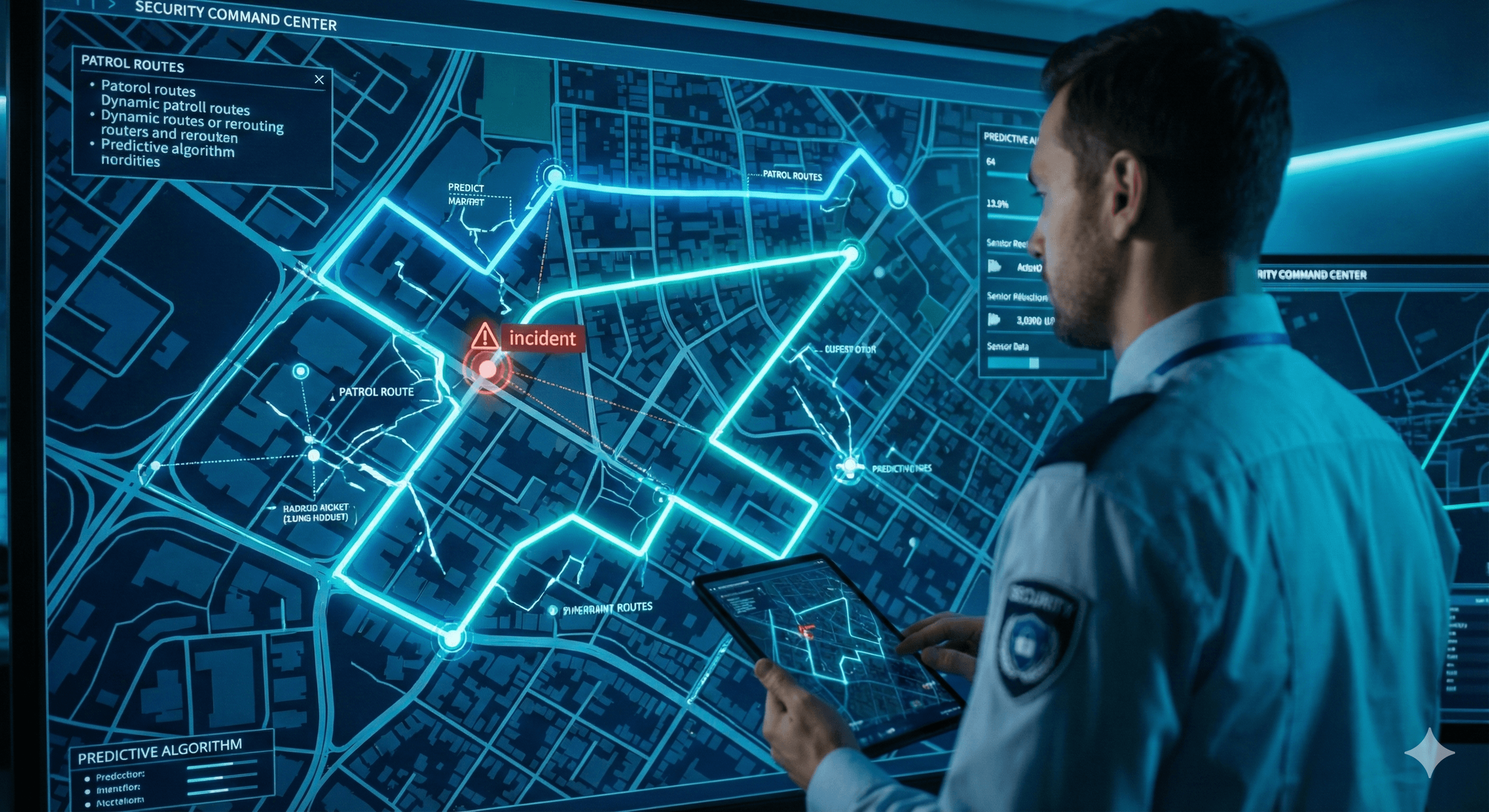
Gone are the days of static routes. Discover how artificial intelligence uses data to predict threats, optimize patrol paths in real-time, and shave critical seconds off incident response times.
For decades, security patrols relied on routine. A guard would drive the same perimeter fence, check the same doors in the same order, at roughly the same times. While better than nothing, this predictability is a vulnerability that sophisticated criminals exploit. Today, Artificial Intelligence (AI) is shattering that routine, transforming patrols from static observation into dynamic, predictive defense mechanisms.
1. Moving from Reactive to Predictive
Traditional security reacts to alarms. AI-driven security anticipates them. By feeding historical data into machine learning algorithms—such as past incident reports, local crime statistics, weather patterns, and even the time of sunset—AI generates "heat maps" of potential risk.
Instead of driving in circles, the AI directs patrol units to hang out in high-risk zones beforesomething happens. The mere presence of a patrol car in a predicted hotspot is often enough to deter crime entirely.
2. Dynamic, Real-Time Re-routing
What happens when an incident occurs across town? In the past, dispatch would radio the nearest car. Today, the AI system analyzes the entire fleet's positions, current traffic conditions, and officer skill sets instantly.
3. The Human-in-the-Loop
It is crucial to understand that AI is not replacing human security officers; it is a "force multiplier." AI handles the complex math of logistics and probability, freeing up the human officer to do what computers cannot: use judgment, de-escalate tense situations, and provide a reassuring human presence.
Why Seconds Matter
In security, response time is everything. By ensuring patrol units are already positioned near likely threat areas, AI can shave critical minutes off response times. Those minutes are often the difference between preventing a break-in and just filing a report after the fact.